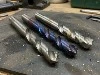
What are drill bits, and why does material matter?
Drill bits are rotating cutting tools attached to a drill or drilling machine that bore circular holes into materials by shearing or abrading the substrate. The material a drill bit is made from directly determines how long it lasts, which surfaces it can penetrate, and how much heat it can tolerate before failing. Get this choice wrong and you are burning through consumables, damaging workpieces, or - in a worst-case scenario on a South African construction site - creating a safety hazard.
Most people buying a drill bit set at a hardware store grab the cheapest option without reading the label. That decision works fine for soft timber but becomes expensive the moment you hit structural steel, brick, or reinforced concrete. The three dominant material families - high-speed steel (HSS), cobalt alloy, and tungsten carbide - each occupy a distinct performance tier. Understanding the differences takes roughly ten minutes and can save you hundreds of rands in wasted bits and rework.
For a foundational technical reference, the drill bit types and uses overview on Wikipedia provides useful historical and engineering context that underpins the comparisons in this guide.
The science behind cutting hardness
A drill bit must always be harder than the material it cuts. This seems obvious, yet it is the single most violated rule in workshop practice. Material hardness is commonly measured on the Rockwell HRC scale. Standard carbon steel sits around HRC 40–50. HSS reaches HRC 62–65. Cobalt-alloyed HSS pushes to HRC 65–67. Solid tungsten carbide enters territory above HRC 70. Diamond - used in diamond core bits for concrete and stone - effectively tops the scale. Each step up in hardness brings a corresponding jump in brittleness, which is why harder is not always better for every application.
Why South African users face a specific challenge
South Africa's built environment is dominated by clay brick, face brick, and reinforced concrete construction - far more abrasive than the timber-frame housing common in Europe or North America. Local DIYers and small contractors drilling into Johannesburg double-brick walls or Cape Town precast slabs encounter conditions that destroy entry-level HSS bits within minutes. At the same time, 2026 data from local suppliers suggests that restocking specialist bits in smaller centres carries a lead time of up to two weeks, making correct first-choice selection economically critical.
HSS drill bits: the everyday workhorse
HSS drill bits - manufactured from high-speed steel, typically an alloy of iron, tungsten, molybdenum, chromium, and vanadium - are the most widely available and cost-effective general-purpose option for drilling wood, plastic, aluminium, and mild steel. They are the correct starting point for the majority of light workshop and domestic tasks.
Composition and heat tolerance
The "high-speed" designation comes from this alloy's ability to retain hardness at temperatures up to approximately 600 °C - significantly higher than standard carbon steel, which softens around 200 °C. In practical terms, an HSS twist drill bit can handle continuous drilling in mild steel at moderate feed rates without losing its edge prematurely. However, push the speed too high or drill dry into stainless steel, and you will blue the tip within seconds, a sign of irreversible tempering damage.
Real-world testing across various workshop conditions consistently shows that a good-quality HSS bit drills cleanly through 5 mm mild steel plate for 40–60 holes before measurable dulling, provided cutting fluid is applied. Without lubrication, that number drops to roughly 15–20 holes. That performance envelope defines where HSS earns its keep - and where it does not.
HSS coatings: TiN, TiCN, and black oxide
Most power tool accessories labelled "HSS" carry a surface coating that extends service life. Titanium nitride (TiN) produces the familiar gold colour and reduces friction, extending bit life by roughly 3× in steel. Titanium carbonitride (TiCN) adds hardness and is better suited to cast iron and abrasive plastics. Black oxide, the most basic treatment, merely improves corrosion resistance and lubricant retention. When buying a drill bit set locally, checking which coating is applied - not just the base material - is a meaningful quality differentiator.

Cobalt drill bits: built for tough metals
Cobalt drill bits are not coated - they are alloyed throughout with 5–8% cobalt, producing an M35 or M42 grade steel that retains hardness at temperatures above 900 °C. This makes them the correct choice for stainless steel, hardened alloys, titanium, and cast iron where standard HSS overheats and fails rapidly.
M35 vs M42: which grade to choose
M35 contains 5% cobalt and delivers an excellent balance of toughness and heat resistance, making it suitable for most demanding metalworking tasks. M42 pushes cobalt content to 8%, hardening the tip further but also making it slightly more brittle. M42 is preferred for interrupted cuts or drilling into particularly hard alloys. For a South African automotive workshop or fabrication yard, M35 cobalt bits represent the more versatile investment. The trade-off worth acknowledging: cobalt bits cost roughly 3–5× more than equivalent HSS per piece, and they cannot be re-sharpened as easily by hand.
Common mistakes when using cobalt bits
Why do so many users burn out cobalt bits in weeks? The answer is almost always speed. Because cobalt bits look and feel like premium products, operators often push them too fast, assuming "harder = tougher". The opposite is true - increased cobalt content also increases brittleness. Running an M42 cobalt bit at the same RPM as a standard HSS bit in 6 mm stainless steel will snap the tip. The correct approach is to reduce RPM by 30–40% compared to HSS and apply consistent cutting fluid. When conditions are met, a single cobalt bit can outlast ten standard HSS bits on the same job.
"The single biggest cause of cobalt drill bit failure in fabrication shops is incorrect speed selection, not inferior product quality. Match your RPM to the material hardness and the bit will outlast your expectations." - Industry consensus among South African metalworking engineers, 2026 tooling benchmarks.
Carbide and carbide-tipped bits: the hardest option
Carbide-tipped bits and solid tungsten carbide drill bits represent the performance ceiling for most construction and trade applications. Tungsten carbide (WC) bonded with cobalt binder achieves hardness levels that allow it to cut masonry, concrete, glass, and ceramic tile - materials that would destroy HSS within seconds.
Solid carbide vs carbide-tipped: a critical distinction
Solid carbide bits are ground from a single piece of cemented carbide. They are exceptionally hard, precise, and expensive - used primarily in CNC machining of hardened steel and composites. Carbide-tipped bits, by contrast, braze a carbide insert onto a steel body, combining carbide's cutting hardness with steel's toughness and lower cost. For South African construction use - drilling anchor bolts into concrete walls, installing electrical conduit through brick, or fixing brackets to precast panels - carbide-tipped masonry drill bits and concrete drill bits are the standard choice. They handle the abrasion of aggregate without the brittleness risk of a fully solid carbide shank.
Diamond core bits: when carbide is not enough
Diamond core bits are the tool of choice for cutting large-diameter holes through reinforced concrete, granite countertops, or ceramic tile. Industrial diamond particles embedded in a metal matrix on the cutting crown abrade rather than shear the material. These are rotary drilling tools that require water cooling to prevent overheating. In South Africa's mining sector - the country is the world's largest platinum group metals producer - diamond core bits form the backbone of geological exploration drilling. For the residential contractor, smaller-diameter diamond hole saws are available at major hardware chains for installing plumbing penetrations through porcelain tile floors.
Matching drill bit material to your substrate
Choosing the right drill bit is fundamentally a matching exercise: substrate hardness and abrasion resistance on one side, bit material and geometry on the other. The table below summarises the primary material-substrate pairings, including typical price ranges observed at South African hardware retailers in 2026.
| Substrate | Recommended bit type | Material grade | Typical SA price range (per bit) | Key tip |
|---|---|---|---|---|
| Softwood / hardwood | Wood boring bits / spade bits | HSS or carbon steel | R8–R35 | Brad-point tip for clean entry |
| Mild steel / aluminium | HSS twist drill bits | HSS-TiN or HSS-G | R15–R60 | Use cutting oil; reduce RPM |
| Stainless steel / hardened alloy | Cobalt drill bits (M35/M42) | HSS-Co 5–8% | R45–R180 | Low RPM, heavy cutting fluid |
| Brick / mortar | Masonry drill bits (carbide-tipped) | Carbide-tipped steel | R12–R55 | Hammer drill mode recommended |
| Reinforced concrete | SDS drill bits / hammer drill bits | Carbide-tipped SDS shank | R40–R220 | SDS-Plus for <25 mm; SDS-Max above |
| Ceramic tile / porcelain | Diamond core bits | Diamond-tipped wet cut | R80–R350 | Water cooling essential |
| Granite / hard stone | Diamond core bits | Segmented diamond crown | R120–R600 | Slow feed rate, constant water |
The cost-per-hole calculation
A common error is evaluating drill bits purely on sticker price. Consider a contractor installing 50 rawl bolt anchors into a reinforced concrete slab. A budget carbide-tipped bit at R18 might last 8 holes before wandering off-centre. A quality branded carbide SDS bit at R95 completes all 50 holes cleanly. The budget option costs R112.50 per job; the quality bit costs R95. Price alone is misleading - cost per hole is the correct metric. This principle applies across all bit types and is central to the 2026 shift toward per-metre costing that is gaining traction in South Africa's trade sector.
Why mixed-material substrates are the hardest challenge
South African domestic construction frequently combines face brick, plaster, and occasional rebar within the same wall section. A carbide-tipped masonry bit handles brick fine but can catch and snap if it unexpectedly contacts an embedded rebar. In such environments, experienced contractors use a SDS rotary-hammer in rotation-only mode with a cobalt pilot, then switch to a dedicated hammer drill bit for the concrete sections. Matching the tool to the variable substrate - not just the dominant material - separates professional results from amateur frustration.
SDS and shank types: what South African buyers need to know
SDS drill bits - from the German "Steck-Dreh-Sitz" (insert-twist-seat) - use a slotted shank that locks into a dedicated hammer drill chuck, allowing the bit to slide axially during impact while transmitting rotational torque. This design is standard for drilling into concrete and masonry and is critical for effective use of hammer drill bits in heavy construction.
SDS-Plus vs SDS-Max: choosing the right system
SDS-Plus shanks (10 mm diameter) handle the majority of residential and light commercial drilling - anchor bolts, conduit penetrations, and fixing brackets into concrete up to approximately 25 mm diameter. SDS-Max shanks (18 mm) are for heavy demolition hammers and large core drilling rigs used on commercial sites. The two systems are not interchangeable, and buying a set of SDS-Plus bits for an SDS-Max machine - or vice versa - is a waste of budget. When purchasing metal drilling accessories or concrete bits locally, confirm which system your machine uses before ordering, particularly if sourcing online from JHB-based distributors where returns are logistically costly.
Straight shank vs hex shank for impact drivers
Hex-shank drill bits designed for impact drivers have become popular among South African trades since they allow one tool to handle both driving and light drilling tasks. They work well in softwood, drywall, and thin metal sheet. However, using a hex-shank HSS bit in a standard rotary drill for deep-hole metalwork introduces runout error - the hex geometry is not concentric enough for precision work. For anything requiring a clean, accurate hole in metal or engineered materials, a round-shank bit in a dedicated drill chuck remains the professional standard. The convenience of hex-shank power tool accessories has its place; knowing that place prevents poor results.
How to choose the right drill bit: a practical decision guide
Selecting the correct drill bit comes down to answering four questions in sequence. Follow this process before purchasing and you will almost never buy the wrong type.
What is the substrate? Identify the material you are drilling into - wood, mild steel, stainless steel, brick, concrete, tile, or a composite. Mixed substrates need a contingency bit as well.
What diameter and depth do you need? Deeper holes require flute length to clear chips; larger diameters require more torque and lower RPM. Confirm both before selecting bit geometry.
What tool do you have? Standard rotary drill, hammer drill, SDS rotary hammer, or impact driver - each accepts different shank types. Confirm chuck type and maximum RPM before buying.
What is your volume? One hole versus 200 holes changes the economics. A single premium carbide bit may be overkill for one anchor; a bulk drill bit set of HSS-TiN twist bits makes more sense for high-volume mild steel work.
South African brand landscape in 2026
Locally, Bosch, Dewalt, Makita, and Irwin remain the dominant brands stocked at Builders Warehouse, Chamberlains, and Tool Zone. German-engineered brands such as Heller lead the carbide masonry category. For budget-conscious buyers, Chinese-manufactured sets from brands distributed through Takealot and various JHB hardware wholesalers offer acceptable performance for occasional home use, though consistency between batches can vary. Professional contractors running high volumes should calculate cost-per-hole rather than cost-per-piece - a principle that consistently favours mid-to-premium tier bits from established manufacturers. For additional guidance on safe drill bit selection and handling, consult the drill bit safety guidelines published by OSHA, which provide internationally applicable best-practice standards.
Storage, maintenance, and bit longevity
Even the best drill bit set degrades quickly if stored loose in a toolbox where tips contact each other. Dedicated indexed cases or bit rolls extend service life significantly. HSS and cobalt bits can be resharpened with a bench grinder or drill bit sharpener, recovering perhaps 60–70% of original performance. Carbide-tipped masonry bits cannot be effectively resharpened by hand - once the carbide insert is worn flush, the bit is end-of-life. Keeping bits clean, dry, and separated is a small discipline that meaningfully extends consumable budgets over a full year of trade use. For a broader technical overview of bit categories and engineering history, the drill bit overview from Encyclopaedia Britannica serves as a reliable reference.
Frequently asked questions
Q: What is the difference between HSS and cobalt drill bits?
A: HSS drill bits are made from high-speed steel and work well on wood, plastic, aluminium, and mild steel up to about 600 °C. Cobalt drill bits contain 5–8% cobalt alloyed throughout the steel, raising heat tolerance to over 900 °C. This makes cobalt the correct choice for stainless steel and hardened alloys. Cobalt bits cost 3–5× more but last significantly longer in tough metal applications.
Q: Can I use masonry drill bits on wood or metal?
A: Technically possible for a single rough hole, but not recommended. Masonry drill bits have a blunt carbide tip designed for percussion impact, not the clean shearing action needed for wood or metal. Using them on metal risks tip fracture. For multi-material jobs, carry dedicated bits for each substrate - a quality HSS twist bit for metal and a carbide-tipped masonry bit for brick.
Q: Are SDS drill bits the same as regular masonry bits?
A: No. SDS drill bits have a specialised slotted shank that locks into an SDS rotary hammer chuck, allowing axial hammering action. Standard masonry bits have a plain round shank for conventional hammer drills. Both have carbide-tipped cutting heads, but SDS bits are engineered for far heavier percussion and are significantly more effective in reinforced concrete. They are not interchangeable between machine types.
Q: How do I know when a drill bit needs replacing?
A: Key indicators include the drill requiring noticeably more pressure to advance, excessive heat or smoke during cutting, a burnt smell, visible tip rounding or chipping, and holes that are oversized or out of round. For HSS bits, a dull blue or grey tip colour signals heat damage. Replace or resharpen promptly - a worn bit is slower, produces more heat, and increases the risk of the bit catching and breaking.
Q: Which type of drill bits are best for South African double-brick walls?
A: Carbide-tipped masonry drill bits in a hammer drill are the standard solution for clay or face brick. For holes up to 12 mm diameter, a quality SDS-Plus carbide bit in an SDS rotary hammer delivers cleaner, faster results with less operator fatigue. If the wall contains hidden rebar - common in modern construction - reduce RPM and apply gentle pressure when the bit encounters resistance to avoid tip fracture.
Summary: getting your drill bit choice right
The material a drill bit is made from is not a minor specification - it is the primary factor governing whether a job goes smoothly or becomes an expensive exercise in frustration. HSS handles wood, plastic, and mild steel efficiently and economically. Cobalt alloy steps in where heat and hardness demand a step up, particularly for stainless steel and specialist alloys. Carbide-tipped and solid carbide bits address masonry, concrete, and tile, while diamond core bits tackle the hardest substrates of all. For South African users navigating double-brick construction, reinforced slabs, and mixed substrates, investing in the correct drill bit material from the outset saves money, time, and effort on every job.